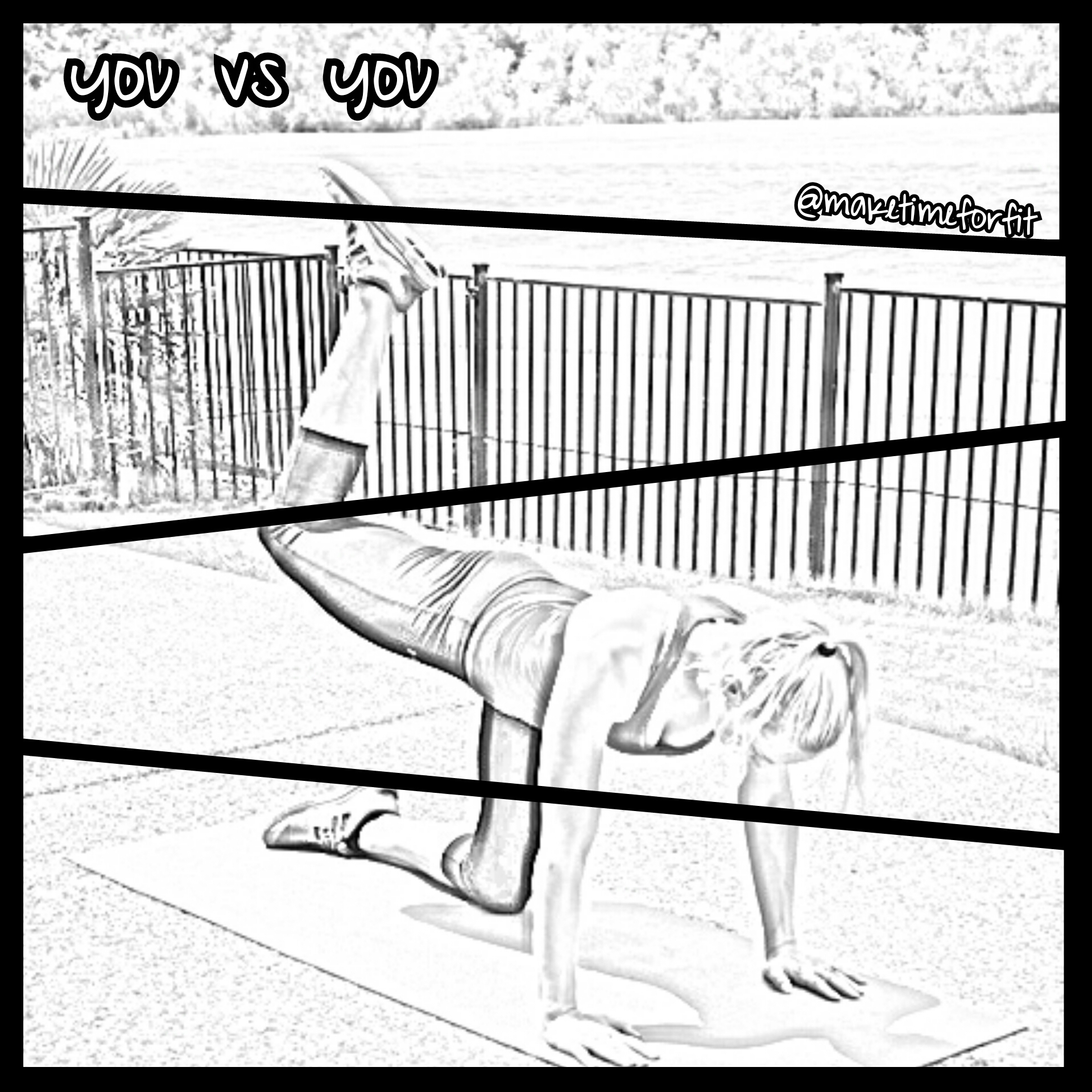
You vs You

Everyone is at a different place in life and same goes for fitness – everyone is at a different place. Everyone has struggles and successes so when you see someone that is where you want to be, before you take even a second to get discouraged – know that someone is looking at you, wishing they were where you are. STOP COMPETING – just try to get better than YOU were yesterday.

Take pictures, take measurements, keep a fitness journal and track YOUR journey. Scales can be very misleading so ditch the scale and look in the mirror – that’s your competition.


youvsyou

Weight loss vs Fat loss

This question is tossed around all the time. Often times you here females say they want to lose weight but are scared to lift weights because they fear they will get “too big.”

Females don’t produce the same testosterone levels as men so you can lift and lift but it’s damn near impossible for you to bulk up like a huge bodybuilder. So from now on don’t even allow yourself to think that!

Plain and simple: the more muscle you have the faster your metabolism works in a resting state.

Therefore the more muscle mass you have the more calories you burn in a day at a resting heart rate.

Example: Man A and Man B  weigh 175. Man A has 10% body fat, Man B 30% body fat. Man A has less body fat (more muscle) will burn more calories naturally in a resting state than Man B with more body fat (less muscle). Dont worry about the number on the scale – worry about your body fat and lean muscle mass.

Ok–youre not feeling it… here’s another example

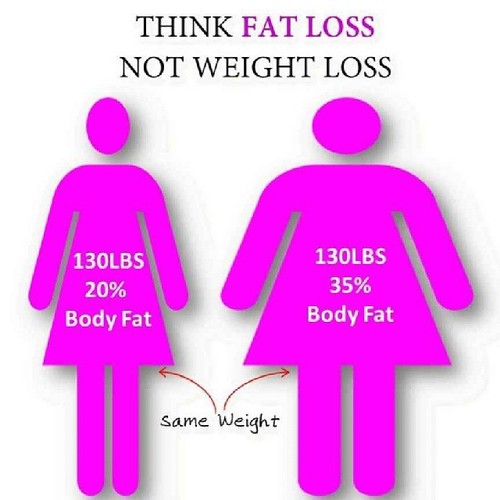
Take a look at this picture:

fat-loss-vs-weight-loss

A pound of muscle is a lot smaller than a pound of fat – even if you aren’t losing “weight” you can (and will) change  your body through gaining muscle!

Focus on FAT LOSS and not weight loss.  You may or may not lose a few pounds,  but gaining lean muscle and losing body fat will definitely result in you liking what you see in the mirror!

Keep your head up 🙆☝and stop looking👀👀 down at the scale!

Look in the mirror and see how your clothes fit :):)💪👊

Sunday BUNSday

Happy Sunday!  If you can’t make it into the gym today don’t worry, I got you!

3-5 rounds of this booty blasting routine will keep you on track and best part, it will take at MOST 35 minutes of your day! Get everyone involved family, friends and neighbors!

Pin,  share,  tag your friends and tackle this Sunday BUNSday workout!

image

What causes leg cramps?

image

With a lot of talk about LeBron James cramping up in the 4th quarter of Game 1 of the NBA Finals, thought I’d share why this happens.

First off, when you run on treadmill versus running outside; outside whether it’s hot or cold it’s harder on your body because you are dealing with the elements. Playing summer basketball or playing inside during winter, the temperature and conditions of the air have an effect on how the body reacts and recovers.

Every other game played this season was played in an air conditioned building. With the A.C. breaking in the At&t center the temperature on the court soared to over 90 degrees. Since players weren’t acclimated to the heat their bodies responded in different ways.

When playing a sport your body uses electrolytes to fuel your muscles. Your body sweats to cool off trying to keep your body temperature close to it’s normal level. Sweat contains sodium, calcium, and potassium which is essential for your body and muscles to functions.

So any other game James’ body has no problem keeping cool and staying hydrated with the air temperature in the 70s. The hot air temperature of the At&t Center caused him to use up -sweat out – all his electrolytes. When stressed the body uses the “reserves” for the heart and organs so the muscles don’t get any of the fuel they need to function properly – so muscles cramp.

It’s also important to note that because of James’ size and low body fat he needs even more electrolytes and hydration. Having lower body makes any athlete more liking to cramp because once you burn the fuel you’re body goes to the burn fat since most professional athletes are very low on body fat they need to keep hydrating and refuelling.

Think of it like James’ is a Tahoe with the gas tank the size of a corolla, big car that needs to refuel because there gas tank can empty quickly since a big body is using up the fuel at a rapid rate.

There’s no way anyone could have planned for the air conditioning to malfunction. Tony Parker said he was used to playing overseas in similar conditions so his body had been acclimated to it over time.

I have no doubt if the A.C. hadn’t stopped working James’ body would have been able to stay cool enough for him too refuel.

Point is: It’s important be aware of the elements and air conditions and to stay properly hydrated! Always keep your body fueled with the right stuff when playing sports or exercising.

Reference: http://www.slate.com

13 Habits of Fit and Lean People

I came across this article and I like the points it makes. I want to highlight the word HABITS. Once you commit to a healthy, active lifestyle you form healthy habits to keep up with that lifestyle.

Here are the 13 Habits:

1. Eat a smart breakfast. Individuals who start their day off with breakfast have a reduced risk of weight gain.
Think about it – when you don’t eat breakfast and that hunger bug finally hits – you want to eat ANYTHING and EVERYTHING. Starting your day with a smart breakfast prevents from making a decision based on hunger and not a smart decision.

Examples: eggs with spinach or bowl of whole wheat oatmeal and fruit

2. Listen to internal hunger cues.  Learning to listen to your inner cues and not social cues – It’s lunch time I need to eat or the boss brought in doughnuts. Social environments like work and parties can be incredable influences on when, how and what people eat. ues such as social pressures or environments strongly influence when and how people eat.  It can become a mindless act – getting candy here or grabbing one more brownie at the office.

Try learning the difference between eating because you are hungry or eating because you are near it.

Tip: To keep yourself honest try keeping a healthy snack, like fruit or nuts, nearby.

3. Avoid skipping meals. According to a study conducted by researchers at Cornell University, short-term food deprivation can lead people to make unhealthy food choices and increase the attraction of high calorie foods. The researchers found that “hungry” participants who did not eat five hours prior to grocery shopping were more likely to buy higher-calorie foods, compared to those who snacked on crackers before shopping. The results confirm the importance of eating before shopping, but also demonstrate that consuming regular meals can promote healthy food choices later in the day.

Lesson: Prevent yourself from the pitfalls of “hungry choices” and stay ahead of your hunger!

4. Eat most meals from home. Eating meals away from home decreases awareness of the calories and ingredients in the meal, as indicated by a 2013 study conducted in popular fast-food restaurants in America. Two-thirds of the 3,385 study participants who ate at a fast-food chain underestimated the calorie content of their meal, with one quarter underestimating by more than 500 calories.

Additional findings in children and adolescents were also published in 2013, demonstrating that eating out at fast food and full-service restaurants increases children and adolescents’ daily energy consumption by 126 to 310 calories. That’s in addition to increasing total fat, saturated fat, sugar and protein intake.

Tip: Pack a lunch! It not only helps you make healthy choices, it saves money in the long run!

5. Load up on plant-based protein. Many individuals who maintain a healthy body weight long-term do so by removing meat from the center of their plate. Studies show that vegetarians tend to have a lower body fat percentage long-term, in addition to lower levels of oxidative stress and cholesterol, compared to their meat-eating counterparts.

Tip: Start shopping in the produce and try to think ahead of meals you can prepare for the week. Planning ahead is super helpful in keeping you on track and prevents you from making unhealthy decisions based on convenience.

6. Avoid foods with added sugars. A diet low in added sugars translates to fewer empty calories and a lower risk of weight gain. A 2013 report from the Centers for Disease Control and Prevention defines added sugars as sweeteners added to processed and prepared foods such as breads, cakes, jam and ice cream. Some examples of added sugars include white sugar, brown sugar, raw sugar, corn syrup, high fructose corn syrup, molasses and honey. The CDC report stated that an increased intake of added sugars is associated with a decreased intake of essential micronutrients and an increase in body weight. Stick to naturally occurring sugars found in fruit and dairy products and minimize intake of added sugars.

Tip: Natural sugars in fruit and yogurt can give you your “sweet fix” and keep you on track with your healthy lifestyle.

7. Creatively add vegetables. Veggies provide a variety of nutrients for very few calories, which makes them a key component to achieving a healthy weight. Incorporating vegetables into snacks and meals leads to a boost in fiber intake, which is associated with increased satiety and weight loss. Creatively add vegetables wherever you can get them into your diet.

Example: For breakfast, add diced veggies to eggs and a few scoops of salsa.
For lunch and dinner, try making a wrap with collard greens instead of tortillas, or add tomato sauce to a baked potato.
Other ideas including seasoning and grilling an entire cauliflower “steak” or incorporating broccoli or kale into a rice dish.

8. Choose 100 percent over 50 percent whole grain. Science demonstrates that the proportion of grains consumed in the diet is not as important as type when predicting future weight gain. The study suggests that a high intake of refined grains and sweets may predict weight gain, while consumption of refined white bread is associated with larger increases in waist circumference. Obvious sources of refined grains are white bread and bagels, while less obvious sources are hidden in “whole grain” products that are not 100 percent whole grain. Get in the habit of avoiding all refined grains by choosing 100 percent whole wheat or 100 percent whole grain products. The benefits of increased fiber intake will aid with weight-loss or help maintain a healthy weight.

9. Use smaller containers. Those who carefully control the quantity of food they consume generally eat from smaller serving dishes and containers. A 2012 study demonstrated that students consumed twice as much candy when they ate from two larger candy bowls, compared to the small bowl. The findings imply that eating with larger serving containers – plates, bowls, spoons and packages – stimulates food intake. To help curb overeating, switch to smaller containers.

TIP: Measure your food just once and you’ll see how big your portions really are. Once you see that make appropriate adjustments to help you keep your portion sizes in check!

10. Read ingredients before anything else. Check to see that the claims made on the front of the package are justified by the ingredients that are in the actual food product. Focusing on the quality of food first and the numbers second will ensure consumption of nutrient-dense calories. While calorie content does determine weight loss fueling your body with quality calories helps promote healthy choices long-term.

11. Don’t drink calories. Sodas, fruit drinks, specialty coffee drinks, energy drinks – the list of empty calories goes on and on. These popular beverages are exploding with sugar, meaning empty calories that provide no nutritional value. Regular consumption of sugary drinks adds inches to the waistline faster than you can finish a 20-ounce bottle of soda. According to results from 2005 to 2006 NHANES data, 35.7 percent of added sugar in the average U.S. diet comes from soda, energy drinks and sports drinks. An additional 10.5 percent of calories from added sugar are derived from fruit drinks. In total, almost 50 percent of sugar calories in the U.S. come from beverages that lack any nutritional benefits.

TIP: Avoid soda all together, you won’t miss it! There are numerous benefits of drinking water – try for a week swamping soda for water and you’ll see and FEEL the change!

12. Get adequate sleep. Research has shown that sleep habits influence people’s dietary habits. A study published in 2011 followed men and women for six years and found that every additional hour of sleep decreased the incidence of obesity by 30 percent. The underlying mechanism that explains the relationship is not known, but experts suspect it involves hunger hormones such as leptin and ghrelin, along with other physiological factors. Aim for seven to eight hours of sleep per night for optimal health.

Tip: Make sleep just as much a priority as everything else – your body will thank you!

13. Wear a pedometer. Individuals who have a lean shape are often active throughout the entire day, not just during their 30-minute date with the elliptical. In order to achieve optimal health and a slim physique, experts recommend taking at least 10,000 steps per day. Start tracking your steps each day with a pedometer or other devices that increase your awareness of your activity.

Lesson: Be aware of how much activity you are getting throughout a day. Pedometers keep you in check and are helpful tools in accessing your activity level!


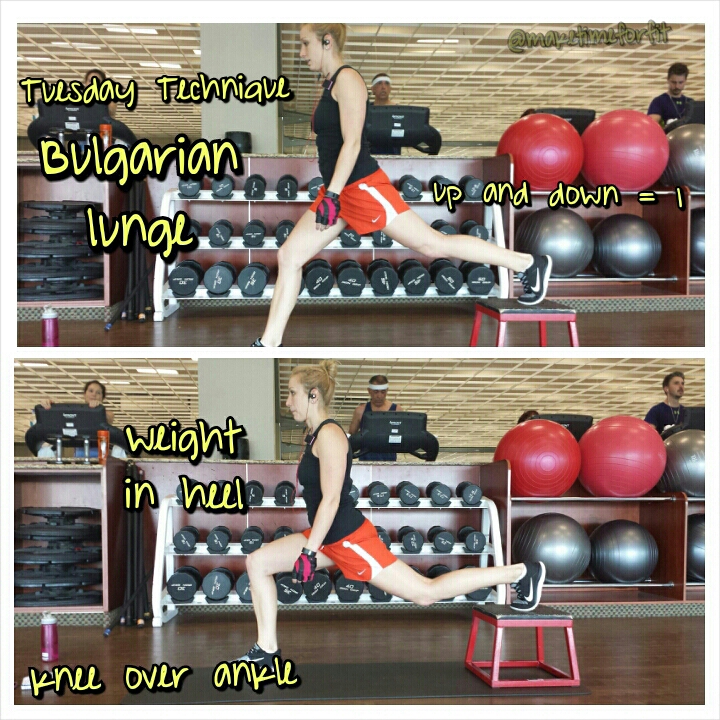
Tuesday Technique: Bulgarian Lunge

Often referred to as the Bulgarian split squat or rear foot elevated split squat.

This effective move trains each leg independently making it a unilateral leg exercise.

The Benefits

  1. Like squatting, this move can produce noticeable muscle and strength gains
  2. Less weights on joints than squatting but allows you to see similar muscular results.
  3. Increases flexibility of the hip flexors and improves overall lower body mobility
  4. Improves both core strength and balance
  5. Helps with agility
  6. Adds variety and targets both legs differently helping to even out the legs unlike squats where one side can compensate for the other.

Image

Add this to your leg workout and see the difference!


Reference: http://www.myweightlifting.com

Eating Right at Restaurants

I like to believe that many people struggle with this and it’s not just me! I go out for lunch or dinner, absentmindedly eat the bread and butter or the chips and salsa and open my menu and think “hmmm what do I want to order?”
Then I get shot with guilt and limit myself to the “Lighter Fare” portions of the menu that more and more places seem to have.  Most people are aware some salads can be just as bad for you as a burger so sometimes it’s hard to narrow down a meal that works with your lifestyle and diet choices. This is what I do and I’m not a licensed nutritionist but I like to think I know enough about what I’m putting into my body.

So what to order: I almost always stick with fish and grilled chicken. I LOVE salmon and scallops so those are personal favorites and I also throw in some Ahi tuna if I’m feeling adventurous. I ALWAYS order the seasonal vegetables instead of the fries, potatoes or rice that comes with the meal. This makes a HUGE difference. If it’s not on your plate you won’t eat it  – plain and simple. If you are feeling really strong and want to go for it, you can even ask for them to not use butter on your vegetables – it’s a game changer for sure. You can always add some yourself if you want to or just eat the butterless veggies and keep it moving! (I’ve done this at Outback and the broccoli was still really good!)

Now this next tip is something I have tried and every time I do it I am so happy I did. I order my meal with vegetables on the side and then politely ask the server – “Is there any way you could bring out half the meal and box up the other half?”

9 out of 10 times they say yes. Some restaurants like their food to be presented in a certain way and dont like to change it up with halving a meal. In those cases I have the server bring a box out with the meal and I box up half before I start eating.

It helps me from over eating and absentmindedly cleaning my plate and having to deal with the fullness that hits about 10 minutes later. I promise sometimes it doesn’t look like much food but it’s better to eat half at dinner and then okay an hour or so later have a little something extra and not overeat without thinking about it!

So next time you head out to a date night, birthday dinner or whatever the case my be; whatever you order – ask for the restaurant to box half before you even get the food and I hope you are a happy as I am when after I eat. I’m full and content  with what I had. A little will power goes a long way!

Another major BONUS you get ANOTHER portioned meal for the next day!

Focus Friday: BOOTY

Focus Friday: BOOTY

Click here for the video!

Two moves:
Curtsy lunge
Bridge with kick

Your butt is your largest and strongest muscle in your body so it’s important to work all of the tiny muscles in there!

These moves fire up your abductors, your outer thighs.

On the curtsy lunge keep your, planted leg with the the weight in the heel and spread your toes for support – ALWAYS keeping your knee over your ankle. Angle your lunge behind the planted leg and curtsy – adding the kick is COMPLETELY optional! That adds another degree of difficultly! Once you master the curtsy lunge try adding the kick!

On the bridge with kick – bridge up and keep your core tight and glutes engaged. Bring one leg under and out and it will really fire up your abductors!

Try doing 4 sets of 12 of these using just your body weight!

Your “inner thigh” and “outer thigh” muscles  are the adductor and abductor. The inner thighs are called adductors, – to remember this, think you move you leg back toward your body – you’re ADDing it back. The abductors are the outer thigh muscles that bring the leg away from the body.

It important to strengthen these muscles because they keep your hips even. Having weak adductors and abductors can result in compromised stride length  and in turn the walking/running gait is hindered and increases the risk of injury.

As we age, it is important to keep the adbuctors and adductors strong to prevent falling and lessen the risk of hip and other lower body injuries.

Snacktime: Kale Chips

I love love love kale chips and the biggest bonus is that kale has tons of health benefits!

Here’s a step by step process for how I make kale chips.

kale1 kale2 kale3 kale4

It is really important to get the kale as dry as possible so it crisps up when you bake it.

kale5 kale6

Don’t go crazy with the extra virgin oil olive – it spreads out as you toss it.

kale7 kale8

You’ll be able to feel that the kale is crispy, like a thin chip.

kale9 kale10

Hope you guys like this recipe – it is a staple in my house!